Key takeaways
- Compacted clay blocks roots, air and water.
- Loosening and adding compost improves clay.
- Grade the surface to drain, never to hold water.
- A soil test saves guesswork.
What makes clay difficult
Clay particles are tiny and pack tightly, so water drains slowly and roots struggle to push through. Construction compaction makes it worse. It also bakes hard in summer and gets sticky in wet weather.
Laying sod on unprepared clay often leads to shallow roots and a lawn that fails in the first summer.
Loosen it
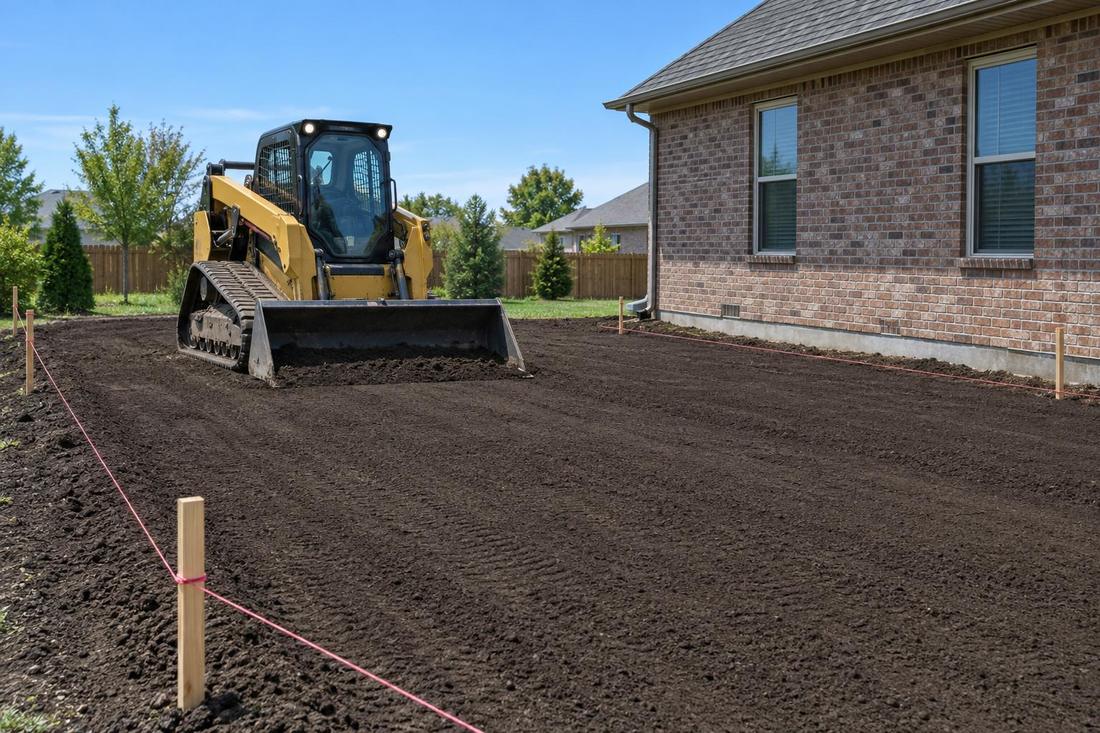
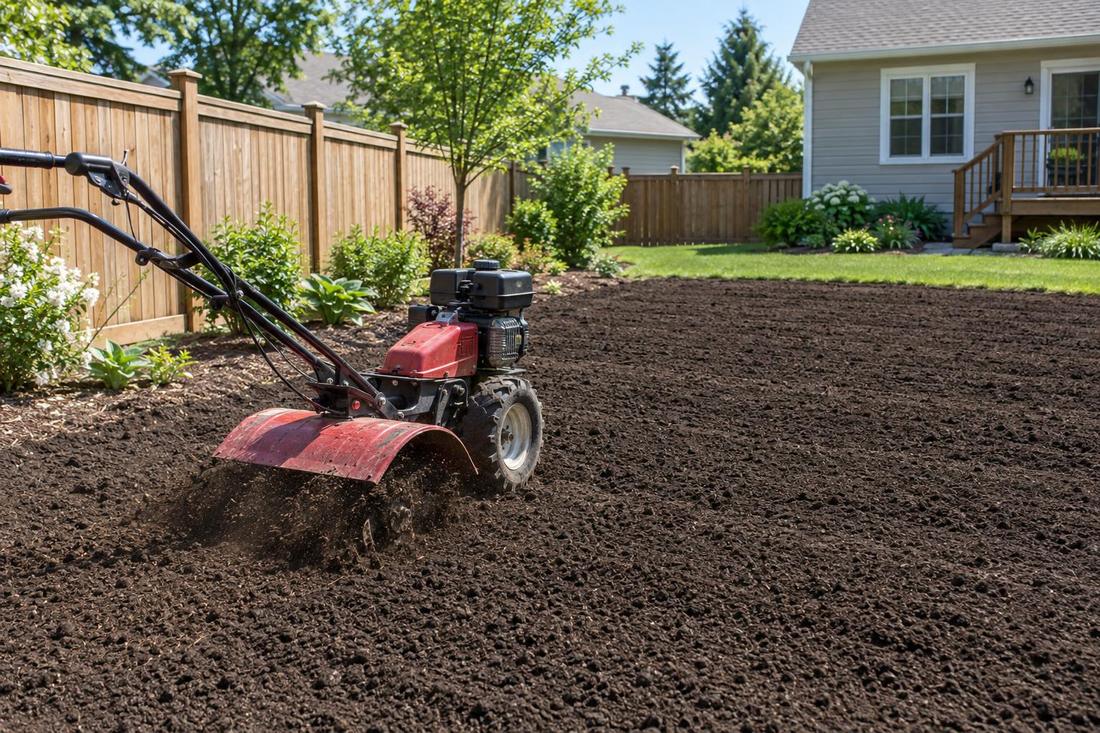
Tilling or aerating breaks up the top layer so roots can grow. The work is best done when the soil is moist but not wet. Rocks, roots and debris are removed at the same time.
Deeper loosening helps most on heavily compacted lots.
Add organic matter
Compost or screened topsoil blended into the top few inches improves structure, holds moisture and feeds soil life. A soil test shows whether lime or fertilizer is also needed.
Do not add sand to clay without understanding the mix, since it can make a cement-like layer.
Grade and drain
Finish the surface with a smooth slope away from the house. If water collects, fix it before laying sod.
Many Nashville lots need regrading and a small drainage fix to make clay work.
Quick answers
Can grass grow in clay?
Yes, with preparation. Many beautiful lawns grow on clay.
Should I add sand?
Usually not. Compost and topsoil work better.