Key takeaways
- Warm-season grasses love heat and sun and go tan in winter.
- Cool-season grasses stay greener longer and handle shade better.
- Middle Tennessee is a transition zone where both can work.
- Your sun, shade and use should decide.
Warm-season grasses
Bermuda and zoysia grow best in hot weather. They handle heat and drought well, repair themselves quickly and make dense turf. They go dormant and tan after frost and green up again in late spring.
They need plenty of sun, so deep shade is a problem.
Cool-season grasses
Tall fescue and Kentucky bluegrass grow best in mild weather. They stay green through much of the winter and tolerate shade better. Summer heat stresses them, so they need good care and often irrigation.
Fescue is the most common lawn in the area.
Why Middle Tennessee is tricky
We sit in the transition zone, where summers are hot enough to stress cool-season grass and winters cold enough to brown warm-season grass. That means there is no perfect grass for everyone.
The choice depends on your site and what you value.
How to choose
Choose a warm-season grass for full sun, heavy use and summer toughness. Choose a cool-season grass for shade, winter color and a classic look. Blends can help in mixed light.
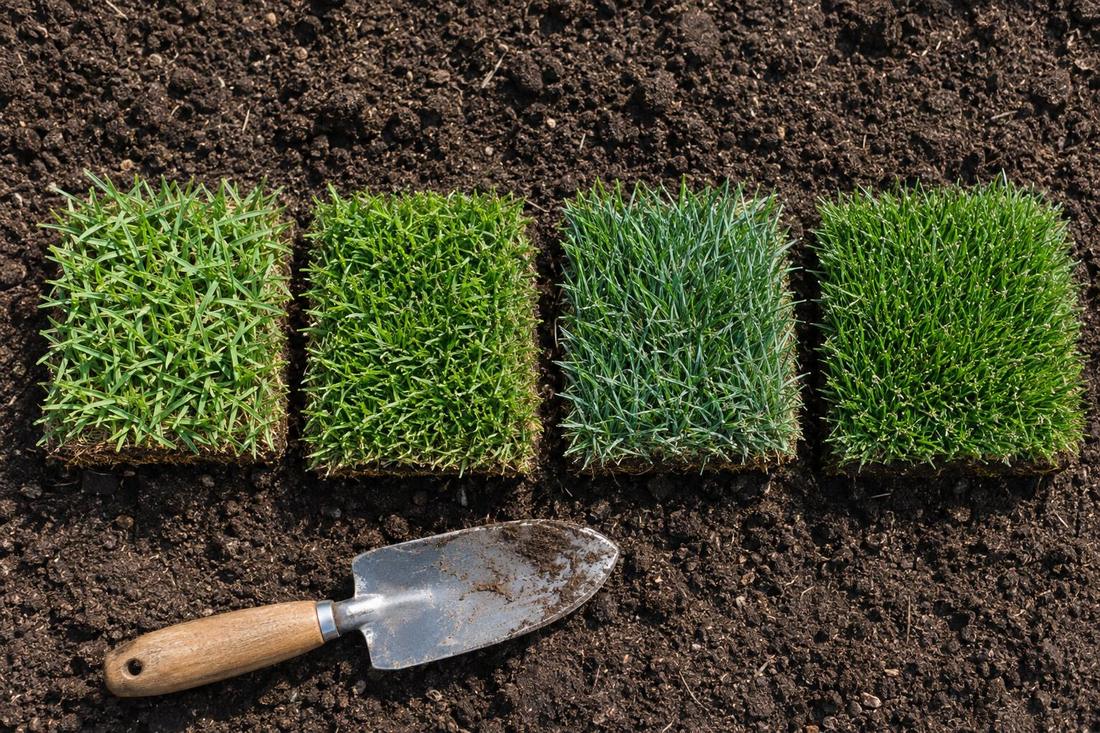
We compare options on site for Nashville homeowners with real samples.
Quick answers
Which is better for kids and pets?
Warm-season grasses like bermuda recover quickly from wear, if the yard gets enough sun.
Which stays greenest in winter?
Cool-season grasses like fescue stay green longer.